Risk Psychology in Motorsport: How Drivers Make Decisions on the Edge of Error
Modern motorsport is built on speed, precision and psychological endurance. Formula 1, endurance racing, rally championships and MotoGP all place athletes in situations where a single decision can determine the outcome of an entire season. Drivers operate under constant pressure while processing large volumes of information within fractions of a second. Every braking point, overtaking move or tyre-management choice carries consequences that may affect safety, race strategy and championship standings. In 2026, with increasingly advanced telemetry systems, hybrid technologies and stricter safety regulations, the mental side of racing has become as important as engineering performance.
How the Human Brain Reacts to Extreme Speed and Risk
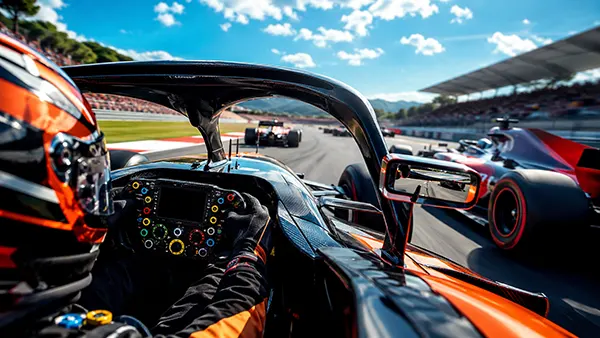
Professional racing drivers develop neurological responses that differ significantly from those of ordinary motorists. At speeds exceeding 300 km/h, the brain must interpret visual information faster while simultaneously predicting the behaviour of competitors, changes in grip levels and potential hazards. This process is not based on instinct alone. Years of simulator work, karting experience and track analysis train the brain to recognise patterns before conscious thought fully forms.
Reaction time remains one of the defining factors in elite motorsport. Formula 1 drivers can react to unexpected track incidents in less than 250 milliseconds. However, reaction speed alone is not enough. The key difference between elite competitors and inexperienced racers lies in decision quality under pressure. A driver entering a corner at maximum commitment must instantly evaluate tyre temperatures, brake wear, fuel load and the movement of nearby cars while maintaining precise vehicle control.
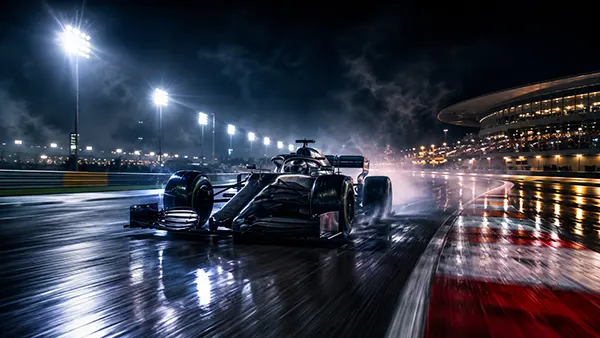
The psychological burden becomes even greater during changing weather conditions. Wet circuits reduce predictability and force drivers to reassess grip corner by corner. This is why races such as the 2021 Hungarian Grand Prix or the rain-affected events at Spa-Francorchamps continue to be studied by engineers and sports psychologists. In these situations, cognitive flexibility often becomes more valuable than outright aggression.
The Role of Adrenaline and Controlled Fear
Fear is not eliminated in motorsport; it is managed. Even world champions acknowledge that fear remains present before high-risk overtakes or during severe weather. Adrenaline increases concentration and sharpens reflexes, but excessive emotional activation can reduce judgement quality. Sports psychologists working with racing teams focus heavily on helping drivers maintain emotional balance rather than suppressing natural reactions.
Controlled fear helps drivers avoid reckless behaviour. Historical examples demonstrate the consequences of emotional overcommitment. Aggressive driving styles that ignore changing conditions often lead to tyre degradation, mechanical failures or collisions. Modern racing teams therefore monitor biometric data, including heart rate and stress indicators, to understand how drivers respond during critical phases of competition.
Mental conditioning programmes in 2026 frequently include breathing exercises, neurocognitive drills and virtual-reality simulations. These methods allow drivers to rehearse stressful scenarios before arriving at the circuit. By exposing athletes to repeated decision-making exercises, teams reduce the likelihood of panic responses during real racing situations.
Decision-Making During Wheel-to-Wheel Battles
Overtaking remains one of the most psychologically demanding aspects of motorsport. Drivers must assess risk and reward within extremely limited timeframes. An aggressive move may secure a podium position, but a failed attempt can destroy both cars and eliminate valuable championship points. This balance between ambition and restraint defines many elite competitors.
Race engineers now play a larger role in strategic decision-making than ever before. Real-time telemetry allows teams to provide instant information regarding tyre degradation, battery deployment and rival performance. However, despite sophisticated communication systems, the final decision still belongs to the driver once the car enters a braking zone. Radio delays, limited visibility and unpredictable rival behaviour mean that human judgement remains central.
Modern circuits have also changed driver psychology. Tracks with larger run-off areas can encourage more aggressive overtaking attempts because the immediate penalty for mistakes is lower. By contrast, traditional circuits such as Monaco or Suzuka create a very different mental environment. Narrow layouts and close barriers increase tension and force drivers to prioritise precision over excessive risk-taking.
How Experience Changes Risk Assessment
Experienced drivers often appear calmer because they rely on accumulated pattern recognition. Veterans can identify risky situations earlier and avoid unnecessary battles that younger competitors may pursue impulsively. This does not mean older drivers become slower. Instead, they frequently become more selective about when to attack.
Data from endurance championships demonstrates this clearly. Drivers with extensive Le Mans or Nürburgring experience tend to produce more consistent lap times during long stints while making fewer critical errors. Consistency under fatigue is closely connected to emotional discipline and efficient cognitive processing.
Younger racers, particularly those entering Formula 2 or Formula 1, often face pressure from sponsors, media attention and contract uncertainty. These external factors influence risk tolerance. A driver fighting for career survival may attempt moves that a championship leader would avoid. Psychological context therefore shapes racing behaviour as much as technical ability.
Mental Preparation and Technology in Modern Motorsport
By 2026, motorsport psychology has become deeply integrated into team operations. Formula 1 organisations employ cognitive specialists, sleep consultants and reaction coaches alongside traditional engineers. Teams increasingly recognise that mental sharpness directly affects lap time consistency and strategic execution.
Simulators have evolved into advanced psychological training environments rather than simple practice tools. Drivers rehearse race starts, safety-car restarts and emergency scenarios repeatedly before major events. Artificial intelligence systems can now generate unpredictable virtual opponents, forcing drivers to adapt under pressure in ways that closely resemble real racing conditions.
Physical fitness also contributes heavily to decision-making quality. High cockpit temperatures and G-forces place severe strain on the body, especially during races in locations such as Qatar or Singapore. Fatigue reduces concentration and increases error probability. As a result, elite drivers follow highly specialised nutrition, hydration and cardiovascular programmes to maintain cognitive stability throughout race weekends.
Why Psychological Stability Decides Championships
Championship battles are rarely won through raw speed alone. Consistency across an entire season requires emotional resilience, adaptability and the ability to recover after setbacks. Drivers who dwell on mistakes often carry psychological tension into future races, increasing the likelihood of repeated errors.
Recent seasons across Formula 1, WEC and rally championships have demonstrated how mental composure influences title outcomes. Drivers capable of remaining calm during technical failures, controversial steward decisions or unexpected weather disruptions generally achieve stronger long-term results. Psychological endurance becomes especially important during condensed racing calendars with minimal recovery time between events.
Motorsport continues to evolve technologically, yet human psychology remains impossible to replace. Even with advanced driver-assistance systems, telemetry analytics and AI-supported strategies, races are still shaped by split-second human judgement. The ability to make accurate decisions while operating at the absolute limit remains one of the defining characteristics of elite racing drivers.