F1: What “porpoising” means today and how teams control it in 2025–2026
Porpoising is still one of the quickest ways for a modern F1 car to lose lap time and punish a driver’s body, even though the headline “bouncing crisis” of 2022 has faded. In 2025, teams treat it less like a mystery and more like a controllable failure mode: a very specific aerodynamic instability that can be triggered by ride height, floor sealing, and how the suspension lets the car move. With 2026 approaching, the sport is also trying to design some of the risk out of the cars, not just manage it with set-up compromises.
What porpoising actually is in ground-effect F1 cars
In plain engineering terms, porpoising is a self-excited vertical oscillation created by the underfloor aerodynamics. As the car runs lower, the floor can generate more downforce very rapidly. At some point the airflow under the floor becomes unstable, the load drops away, the car rises, the airflow reattaches, and the cycle repeats. The key detail is the feedback loop: ride height changes aero load, and aero load changes ride height, so the system can start “pumping” if the conditions are right.
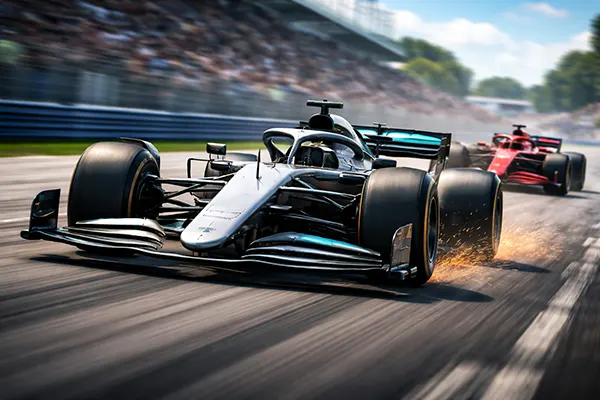
It is not the same as normal bouncing over kerbs or a stiff ride on a smooth straight. Regular bouncing is forced by the track surface. Porpoising is driven by the car’s own aerodynamics, often strongest on fast straights where the floor is working hardest. Drivers feel it as a rhythmic heave, sometimes building suddenly when the car crosses a speed threshold or when fuel load drops and the car naturally sits lower.
Another useful distinction is between pure porpoising and broader “vertical oscillations” that include tyre sidewall dynamics and suspension modes. The real world is messy: a car can start with a small aerodynamic instability and then excite a chassis mode, or vice versa. That is why teams talk about it in terms of frequency, amplitude, and when it appears in the lap, rather than treating it as a single on/off condition.
Why it hurts performance and why it became a safety issue
Lap time suffers first because the floor stops producing consistent downforce. When the airflow detaches, the car is effectively losing a chunk of grip at exactly the moment the driver wants stability. Teams then have to back away from the optimal aerodynamic window: raise the ride height, soften the car, add drag, or trim downforce to keep the oscillation under control. Every one of those choices has a cost somewhere else on the lap.
Tyres also take a hit. An oscillating car is harder on the contact patch because the vertical load is not steady, and that can make temperature control less predictable. You can end up in a situation where the driver is protecting the tyres not just from sliding, but from repeated load spikes. Over a stint, that can change degradation patterns and even make a car more sensitive to wind and traffic because the floor sealing is already marginal.
On the human side, sustained vertical impacts were taken seriously after the early ground-effect seasons. The FIA introduced short-term measures and a monitoring approach in the name of driver safety, and kept the option to intervene if the problem returned. Even when it is “manageable”, teams still aim to remove it because a car that is stable on the straight is easier to place under braking and more predictable through fast direction changes.
How teams control porpoising during a race weekend in 2025
The first lever is ride height, and it is still the most effective. Teams map where the floor produces peak downforce and where it becomes unstable, then choose a target window that stays away from the cliff edge. The trade-off is straightforward: higher ride height usually means less peak downforce, but it can deliver more usable downforce because it is consistent. In 2025, you often see teams accept a small pace loss on paper to gain confidence, tyre life, and a wider operating range.
The second lever is how the car moves, not just how high it sits. The heave system, third element, bump rubbers, and damper settings can be tuned to slow down the vertical motion or stop the car dwelling at the critical low ride heights where the floor stalls. Engineers look closely at the frequency content of the oscillation: if they can shift the car away from a resonant mode, the problem can reduce dramatically without a big aerodynamic redesign.
The third lever is aerodynamic robustness. Floor edges, floor stiffness, and the way the underfloor seals to the track matter because a small change in sealing can flip the behaviour. Teams use CFD, wind tunnel work, and track correlation to understand how sensitive the floor is to pitch and heave. If the floor is “peaky”, the car becomes harder to run low. If it is more progressive, engineers can chase performance without accidentally stepping into instability.
What teams measure and how they decide if the fix is real
Teams rely on vertical accelerometers, suspension position sensors, plank wear inspection, and high-rate telemetry to see the oscillation clearly. A driver description like “it starts at the end of the straight” is valuable, but engineers want to know the exact speed, gear, throttle state, and ride height at onset. They also watch for how quickly the oscillation grows, because a slow build can be managed with set-up, while a sudden jump often points to an aerodynamic stall threshold.
Correlation is the quiet battle. A set-up that looks fine in simulation can misbehave on track because of porosity of the asphalt, kerb profiles, wind gusts, or subtle floor deflection under load. That is why teams do controlled runs: same tyre compound, same fuel target, minor changes only, and then compare the data. If a “fix” works only in a narrow window, it is not a fix — it is a temporary patch that might collapse when conditions shift.
Decision-making also accounts for raceability. A car that is stable in clean air but starts oscillating in dirty air can be a nightmare on Sunday, because following another car changes the pressure field and the floor’s sealing. So engineers will sometimes choose a more conservative configuration that gives away a tenth in qualifying but keeps the car predictable in traffic. In 2025, that kind of compromise is still common, especially at high-speed circuits.
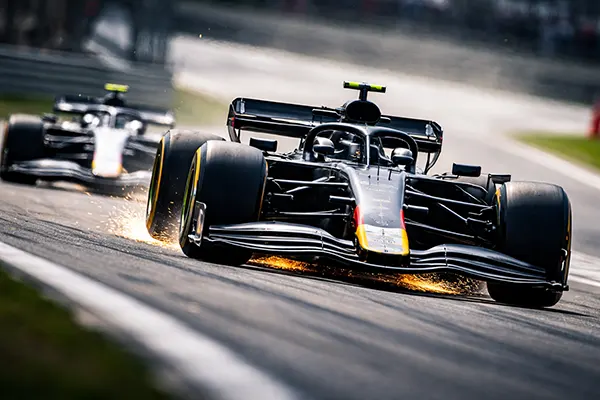
What changes in 2026 and why porpoising risk should reduce
The headline reason 2026 should help is the aerodynamic concept. The regulations move away from the very powerful long underfloor tunnels of 2022–2025 and toward a flatter floor approach, with the aim of reducing the sharp increase in downforce as the car gets lower. If the downforce curve is less aggressive near the ground, the feedback loop that drives porpoising becomes harder to trigger in the first place.
Another practical factor is how the rules manage the floor and wear. Strict definitions around the plank assembly and floor wear, plus prescribed elements, push teams away from extreme “run-it-on-the-edge” ride heights where the car is most vulnerable. If you cannot live at ultra-low ride heights without risking legality, you are less likely to spend your weekend flirting with the instability threshold.
2026 also introduces a different aero management philosophy, including configurable aerodynamic states. While that is mainly about energy efficiency and racing, it indirectly matters for porpoising because the car will not be trying to produce maximum underfloor load in every situation. If the car can shed drag and downforce intentionally on straights, the conditions that previously encouraged oscillation may appear less often or with lower severity.
Why teams still won’t ignore it (and what can still go wrong)
Even with a flatter floor concept, teams will chase performance, and performance still tends to reward running lower and stiffer than is comfortable. The moment someone finds a way to recover underfloor load without an obvious penalty, the sport can drift back toward sensitive operating windows. That is why experienced engineers talk about porpoising as a “design and set-up mindset” problem as much as a single technical feature.
There is also the reality of development cycles. Early versions of a new ruleset are where teams make big conceptual bets, and some of those bets will be wrong. If a team builds a floor that is too aggressive, or a suspension package that does not control heave well, it can recreate the same symptoms even under a different rules framework. The first few tests of a new era are often when these behaviours show up most clearly.
Finally, you can reduce the likelihood without guaranteeing elimination. Track surfaces vary, winds change, and teams will still try to extract peak performance in qualifying trim. The smart expectation for 2026 is not that porpoising vanishes overnight, but that it becomes less central: fewer weekends dominated by emergency ride-height changes, and more room to set the car up for grip, tyre management, and overtaking rather than simply surviving the straight-line instability.