How FIA Race Control Operates: Decisions During Crashes, SC and VSC
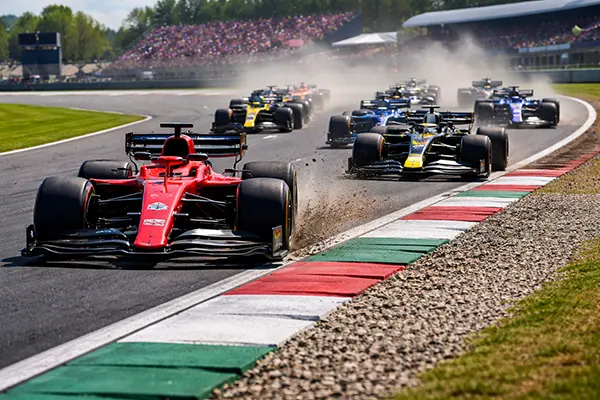
FIA Race Control sits at the centre of every Formula 1 event, overseeing safety, fairness and regulatory enforcement in real time. From high-speed accidents to neutralising the race with a Safety Car (SC) or Virtual Safety Car (VSC), the team must process vast amounts of data and act within seconds. Their decisions influence not only driver safety but also race strategy and final results, making their role both technical and highly scrutinised.
The Structure and Responsibilities of FIA Race Control
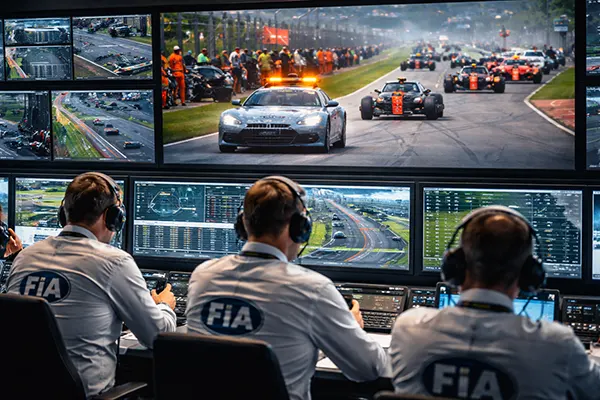
Race Control is led by the Race Director and supported by a team of stewards, technical delegates and communication specialists. As of 2026, the FIA has further standardised procedures following reforms introduced after the 2021 season, including clearer protocols and shared decision-making processes. Multiple camera feeds, telemetry data and direct radio links with teams allow the group to monitor every sector of the circuit simultaneously.
The primary responsibility is ensuring safety. This includes monitoring track conditions, weather changes, debris and driver behaviour. When incidents occur, Race Control must quickly assess severity, determine whether intervention is required and choose the appropriate response. This can range from local yellow flags to deploying a full Safety Car.
Beyond safety, Race Control enforces sporting regulations. This involves track limits, unsafe releases in the pit lane and penalties for infringements. Decisions are based on a combination of live data, video evidence and predefined FIA rules, ensuring consistency across races.
Technology and Communication Systems in Use
Modern Formula 1 relies heavily on advanced digital infrastructure. Each car transmits hundreds of data points per second, allowing Race Control to detect issues such as sudden deceleration or loss of control instantly. GPS tracking systems provide precise positioning, which is essential when coordinating neutralisation procedures.
Communication with teams is managed through official FIA messaging systems and direct radio channels. When Race Control issues instructions—such as “SC deployed” or “VSC in effect”—teams receive them simultaneously, reducing the risk of confusion or delay.
Video analysis also plays a critical role. High-definition onboard cameras, trackside feeds and slow-motion replays help officials evaluate incidents in detail. This multi-layered approach ensures decisions are based on clear and verifiable evidence rather than assumptions.
Decision-Making During Accidents and On-Track Incidents
When an accident occurs, Race Control follows a structured assessment process. The first step is identifying whether drivers are safe and whether marshals can access the scene. If a car is stranded in a dangerous position or debris is scattered across the track, immediate action is required.
Local yellow flags are typically the first response, warning drivers to slow down in a specific sector. If the situation escalates, double yellow flags or a Safety Car may be deployed. The choice depends on factors such as track blockage, visibility and the time required to clear the incident.
In recent years, the FIA has placed greater emphasis on consistency. Standardised guidelines introduced in 2023–2025 aim to reduce ambiguity, ensuring similar incidents are handled in comparable ways across different circuits and race weekends.
Penalty Decisions and Incident Reviews
Not all incidents are resolved immediately. Some require post-event investigation by stewards, particularly when determining fault in collisions. Race Control collects and forwards relevant data, including telemetry and video footage, for detailed review.
Penalties can range from time additions to grid drops or even disqualification. The severity depends on intent, consequences and whether a driver gained an advantage. Clear communication of these decisions is essential to maintain transparency for teams and viewers.
Since 2024, the FIA has improved the publication of decision documents, providing more detailed explanations. This has helped teams and fans better understand the reasoning behind penalties, reducing controversy around close calls.
Safety Car (SC) and Virtual Safety Car (VSC) Procedures
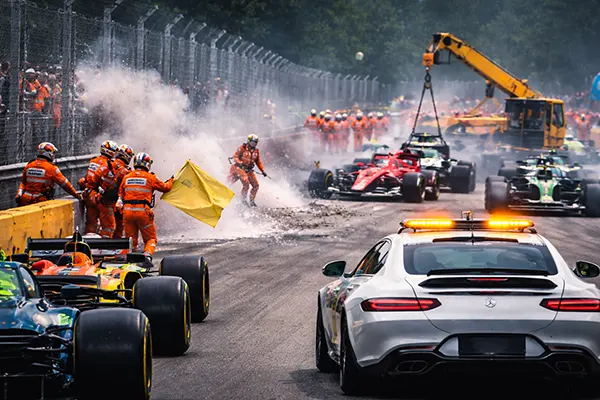
The Safety Car is deployed when track conditions are unsafe for racing at full speed. Once activated, all drivers must follow the Safety Car in a controlled queue, maintaining specific gaps and adhering to delta times. This allows marshals to safely clear debris or recover vehicles.
The Virtual Safety Car serves as a less disruptive alternative. Instead of bunching up the field, drivers must reduce speed to a predefined delta across the entire lap. This system was introduced after the 2014 Jules Bianchi accident and has since become a standard tool for managing moderate-risk situations.
Choosing between SC and VSC depends on the severity and location of the incident. A full Safety Car is used when physical intervention on track is required, while VSC is preferred for quicker clean-ups where full neutralisation is unnecessary.
Strategic Impact of SC and VSC in Modern F1
Both SC and VSC significantly influence race strategy. Teams may use these periods to make pit stops with reduced time loss, potentially reshuffling the order. Race Control must therefore ensure deployments are justified purely by safety considerations, not competitive impact.
In 2026, teams are highly adept at reacting instantly to neutralisation signals. Automated systems calculate optimal pit windows within seconds, meaning even a short VSC can alter race outcomes. This places additional pressure on Race Control to act precisely and consistently.
Ultimately, the balance between safety and sporting fairness defines the effectiveness of SC and VSC procedures. FIA Race Control continues to refine its approach, using data analysis and post-race reviews to improve decision-making with each season.