NASCAR Next Gen Car: How New Engineering Changed the Character of Stock Car Racing
The NASCAR Next Gen Car marks a major turning point in modern stock car racing, reshaping how competition is structured, how teams operate, and how drivers approach every lap on track. Its introduction has influenced not only performance balance but also the overall identity of the Cup Series.
A new era of parity and closer competition
One of the most significant outcomes of the Next Gen Car is the dramatic increase in competitive parity. By standardising key components such as the chassis, gearbox, and aerodynamic elements, NASCAR reduced the ability of top teams to gain large advantages through bespoke engineering solutions. This has resulted in a tighter field where small performance differences have a much greater influence on race positions.
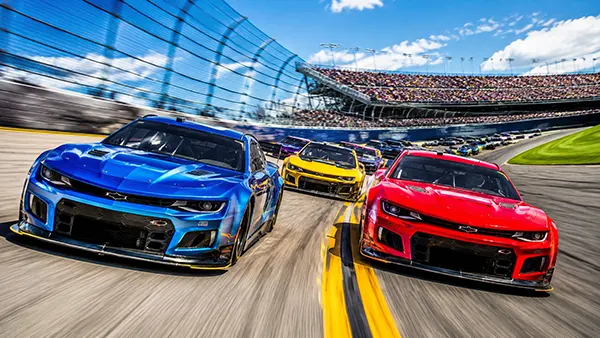
Races now frequently feature long trains of closely matched cars running in groups, particularly on intermediate circuits. This compresses the field and creates extended battles for position, where overtaking opportunities depend heavily on timing, drafting, and tyre condition rather than pure horsepower or aerodynamic superiority. The visual result is a more compact and intense racing product.
Another consequence of this parity is the increased unpredictability of race outcomes. Traditional front-runners can no longer rely on long-run dominance, as strategy calls, caution timing, and restarts often reshuffle the competitive order. This has made NASCAR races more fluid, with multiple potential winners emerging deep into the final stages.
Impact on teams and race strategy
Teams have been forced to adapt their entire operational philosophy to the constraints of the Next Gen regulations. With fewer adjustable engineering variables available, the focus has shifted towards optimising balance, tyre management, and track-specific setup choices. Engineers now spend more time refining small adjustments that influence drivability rather than seeking large performance gains.
Race strategy has also become more reactive and data-driven. Crew chiefs must respond quickly to changing track conditions, caution periods, and fuel windows, often making decisions that prioritise track position over long-term planning. This has increased the importance of real-time communication between drivers and pit boxes.
Drivers themselves have taken on a more central role in performance extraction. Because mechanical differences are reduced, success often depends on how well a driver can adapt to evolving grip levels, manage tyres under pressure, and position the car effectively in turbulent air. This has elevated the importance of racecraft as a defining skill in the Next Gen era.
Safety improvements and structural innovation
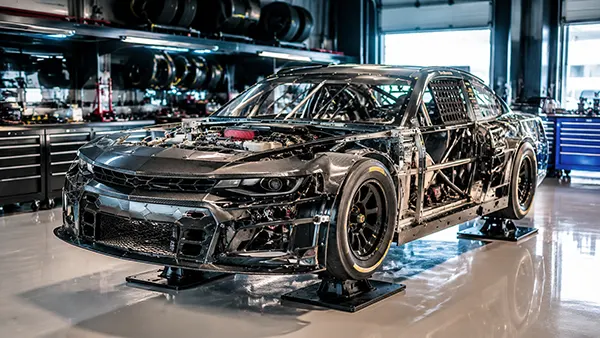
Safety was one of the primary motivations behind the development of the Next Gen Car, and the results reflect a significant advancement in crash protection technology. The redesigned chassis incorporates improved energy absorption zones, which help distribute impact forces more effectively during collisions. This reduces the likelihood of severe driver injury in high-speed incidents.
The car also features a more rigid central structure combined with enhanced side-impact protection. These modifications were developed using extensive crash simulation data and real-world accident analysis. The goal was to create a survival cell that maintains integrity even under extreme racing conditions, particularly in pack racing environments.
In addition to crash safety, operational safety improvements were introduced in areas such as pit stops and wheel assembly design. Standardised parts have simplified procedures for pit crews, reducing the complexity of rapid service situations and lowering the risk of mechanical errors under pressure.
Real-world racing consequences
On track, these safety upgrades have had a noticeable influence on driving behaviour. Competitors are generally more willing to race closely, especially in braking zones and corner entry situations, knowing that the car is designed to handle significant impacts. This has contributed to more aggressive and compact racing packs.
However, the intensity of modern pack racing also means that when incidents do occur, they can involve multiple cars at once. While the structural integrity of the Next Gen Car mitigates injury risk, the visual severity of crashes can still appear dramatic due to the close proximity of competitors during incidents.
Overall, the safety improvements have achieved their intended goal of enabling closer racing while maintaining high protection standards. This balance has become one of the defining characteristics of the current NASCAR era.
Driving experience and the new racing identity
The driving dynamics of the Next Gen Car differ significantly from previous generations of stock cars. The introduction of independent rear suspension and a sequential gearbox has modernised vehicle behaviour, making it more precise and responsive. These changes have altered how drivers approach cornering, braking, and throttle application.
With more uniform mechanical characteristics across teams, the car places greater emphasis on adaptability rather than setup exploitation. Drivers must quickly adjust to subtle changes in grip levels, tyre degradation, and aerodynamic wake. This creates a more technical and rhythm-based driving style.
In longer runs, tyre management and positioning become essential. Because performance differences are smaller, maintaining momentum through corners and avoiding disruption in traffic often determines whether a driver can advance or defend position effectively.
How fans and the sport have adapted
From a broader perspective, the Next Gen era has reshaped how audiences experience NASCAR racing. The increased parity and closer competition have led to more frequent lead changes and tighter battles throughout the field, not just at the front. This has enhanced overall race engagement.
While some long-time followers note that the technical diversity of earlier eras has been reduced, others appreciate the closer competition and reduced predictability. The sport now places greater emphasis on driver performance and race execution rather than engineering disparity.
As NASCAR continues to refine the Next Gen package, it is becoming clear that this generation of car is not just a technical update but a structural reset of modern stock car racing. Its influence will likely shape the sport’s direction for years to come.