Curious Sponsors Formula 1
Formula 1, the pinnacle of motorsport, has long attracted advertisers seeking to associate their names with speed, technical innovation, international prestige, and a highly visible global championship. Commercial branding became a defining feature of the sport from the late 1960s, when teams began moving away from traditional national racing colours and increasingly relied on sponsorship to finance car development, travel, personnel, and competition. Since then, Formula 1 liveries have reflected changing business trends, from the once-dominant tobacco companies to technology, finance, fashion, consumer goods, and luxury brands. Alongside familiar multinational sponsors, however, the championship has also welcomed backers whose products, identities, or business arrangements seemed unusual for elite motorsport. Some partnerships were eccentric but harmless, while others became controversial because of unpaid commitments, public disputes, or unexpected advertising choices. The following five examples show how Formula 1 sponsorship has occasionally produced stories almost as memorable as the racing itself.
ABBA and ATS
The 1970s was a golden era not only for F1 but also for disco music. Surprisingly, these two worlds collided. The German F1 team ATS, short of funding in 1977, found unexpected benefactors in none other than ABBA, the Swedish pop sensation. Benny Andersson, a member of ABBA, was a racing enthusiast and decided to sponsor the ATS team for a short stint. While the partnership did little to boost the team’s fortunes on the track, it remains one of the most unusual sponsorships in F1’s history.
Supercomputer for Onyx
In 1989, Onyx entered Formula 1 after establishing itself as a competitive team in the junior categories. Its ORE-1 car, designed by Alan Jenkins and powered by a Ford Cosworth engine, raced with prominent backing from Moneytron, the financial business associated with Belgian financier Jean-Pierre Van Rossem. Onyx faced the considerable technical and financial challenges that confronted many smaller constructors of the period, but the team still achieved several notable results. Stefan Johansson finished fifth at the French Grand Prix before securing an unexpected third place in Portugal, giving Onyx its only Formula 1 podium. Despite that achievement, ownership disputes and continuing financial instability weakened the operation, which withdrew from the championship during the 1990 season.
The Prince Who Buried the Arrows
T-Minus, a brand no one had heard of, appeared on the Arrows cars in 1999. Behind this mysterious brand was Prince Malik ado Ibrahim, who promised significant financial backing. Unfortunately, the Prince’s promises fell through, with payments rarely materializing. The whole episode cast a shadow over the Arrows team, which struggled financially and eventually folded in 2002.
Rich Energy vs. Haas
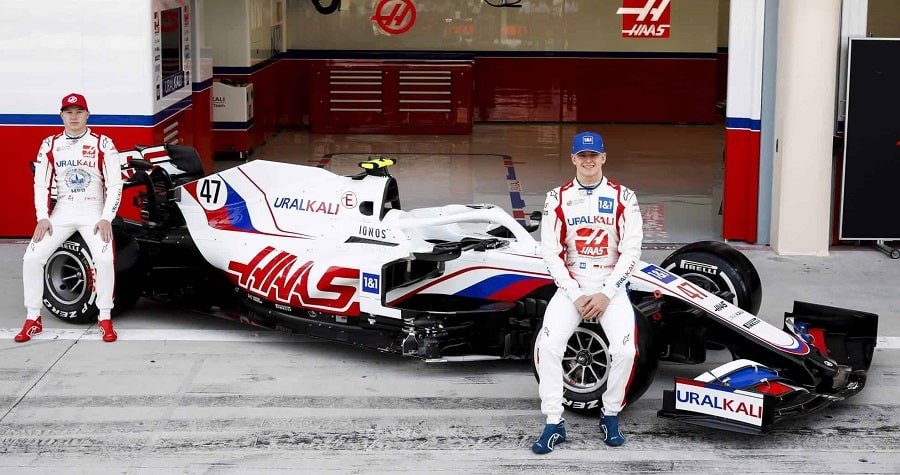
The modern era isn’t devoid of strange sponsorships either. Enter Rich Energy, an energy drink company that became the main sponsor for Haas F1 Team in 2019. From the outset, the partnership was fraught with controversy. Questions about Rich Energy’s legitimacy, coupled with CEO William Storey’s brazen public remarks, made for a tumultuous relationship. The deal ended prematurely with a very public and acrimonious split.
BBC v Durex
One of the most eyebrow-raising sponsors in F1 came in the form of Durex, the condom manufacturer, which backed the Surtees team in 1976. The move was so controversial that the BBC, for reasons of taste and decency, chose not to broadcast the British Grand Prix that year, feeling the sponsorship was too risqué for viewers.
Conclusion
Formula 1 is a sport built on the combination of advanced engineering, strategic decision-making, and exceptional driving skill, yet its commercial history is equally rich in eccentric and unexpected episodes. From pop musicians and mysterious investment ventures to controversial consumer brands and questionable energy-drink companies, these sponsorships demonstrate that not every partnership has followed a conventional business model. Some provided teams with valuable short-term funding, while others created disputes, reputational problems, or promises that were never fulfilled. Together, they show that behind the glamour and technical sophistication of Formula 1 lies a colourful history shaped not only by drivers and engineers, but also by the unusual individuals and businesses willing to place their names on a racing car.