Four Days of Formula 1 Pre-Season Testing in 2027: Why the FIA Extended Preparation Time
Formula 1 teams will have four days of official pre-season testing in 2027 instead of the usual three, following a decision by the FIA to give competitors more time to prepare their increasingly complex cars. The test is scheduled for 24–27 February at the Bahrain International Circuit in Sakhir, just over two weeks before the opening Grand Prix. Although an extra day might appear to be a small adjustment, it reflects the challenges created by the technical regulations introduced in 2026. Teams must understand demanding new power units, aerodynamic systems and energy management strategies while maintaining reliability. The extended session is intended to make that process more manageable before another 24-race championship begins.
Why the FIA Approved Four Days of Testing for 2027
The decision originated at the Formula 1 Commission meeting held in London on 2 June 2026. Chaired by FIA Single-Seater Director Nikolas Tombazis and Formula 1 President and CEO Stefano Domenicali, the meeting approved a proposal to increase the annual pre-season test from three days to four. The FIA World Motor Sport Council subsequently ratified the change as part of wider regulatory updates for 2027 and 2028. The governing body’s explanation was straightforward: the current generation of Formula 1 cars is particularly complex, and teams require sufficient time to understand their behaviour. The additional running is therefore a practical response to the demands of modern car development rather than an attempt to change the competitive format.
The background to this decision is the major technical overhaul introduced for the 2026 championship. Formula 1 adopted substantially revised power units, a greater emphasis on electrical energy and new aerodynamic regulations designed to improve efficiency. These changes affected more than outright speed. Drivers needed to adapt their approach to acceleration, braking, overtaking and energy recovery, while engineers had to learn how different systems worked together. Although the 2027 cars will represent an evolution of those introduced in 2026 rather than another entirely new generation, teams will still be refining their understanding of the regulations. Four days of testing provide additional opportunities to investigate weaknesses and evaluate improvements before competitive racing begins.
There is also an important distinction between the number of testing days in 2026 and the arrangement planned for 2027. Ahead of the 2026 season, teams had access to a five-day private shakedown window in Barcelona, with individual competitors permitted three days of running, followed by two separate three-day tests in Bahrain. That exceptional programme was designed to support the introduction of new regulations. For 2027, Formula 1 will return to a single official pre-season test, but its duration will increase to four consecutive days. The overall programme will consequently be shorter than in 2026, even though the standard three-day format is being extended. This distinction matters when assessing how much preparation time teams actually receive.
How the 2026 Regulations Increased the Demands on Teams
The new power unit regulations are central to understanding why additional testing remains valuable. Formula 1’s current engines combine a turbocharged internal combustion engine with a substantially increased electrical contribution compared with the previous generation. The cars also use advanced energy recovery and deployment strategies that influence performance throughout a lap. Drivers cannot simply demand maximum electrical assistance whenever they want it because available energy must be managed. Teams therefore need to establish how their cars behave under different racing conditions, including long straights, heavy braking zones and repeated acceleration out of slower corners. These characteristics affect lap times, overtaking opportunities and the consistency needed during a full Grand Prix.
Changes to the aerodynamic rules have created another demanding area of development. The 2026 regulations introduced movable aerodynamic configurations intended to help cars balance straight-line efficiency with cornering performance. Engineers must understand how these systems interact with mechanical grip, tyres and changing fuel loads. A set-up that produces an impressive lap on fresh tyres may behave differently during a lengthy race simulation. Bahrain provides an opportunity to investigate these relationships through repeated runs under controlled conditions. Even after a full season of competition in 2026, teams may discover improvements that require further evaluation before the following championship begins.
The FIA has also approved adjustments to the balance between combustion-engine performance and electrical energy deployment for the 2027 and 2028 seasons. These measures are intended to address lessons from the first year of the revised power unit regulations and provide greater flexibility in how energy is managed. The changes add another reason for teams to collect representative data with their 2027 cars. Manufacturers and their customer teams must understand how revised operating conditions affect reliability, efficiency and driving characteristics. An extra testing day cannot eliminate every uncertainty, but it gives engineers more opportunities to compare their expectations with actual performance on the circuit.
What Happens During the Four-Day Bahrain Test?
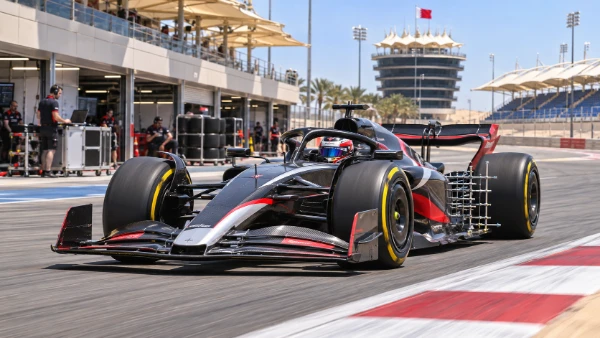
The official 2027 pre-season test will take place from Wednesday 24 February to Saturday 27 February at the Bahrain International Circuit in Sakhir. The venue is familiar to Formula 1 teams, having regularly hosted winter testing and championship races. Its combination of long straights, substantial braking zones and varied corners makes it useful for examining several aspects of car performance. Bahrain’s relatively predictable winter weather also helps teams organise their programmes, although wind, track temperature and changing grip can still influence results. Holding the session at the same circuit as the season-opening Bahrain Grand Prix provides an additional advantage: teams can gather information directly relevant to the first competitive weekend.
Under the FIA’s 2027 Sporting Regulations, each competitor may operate only one current Formula 1 car per day during the official collective test. This means both race drivers must share the available running unless the team makes another permitted driver arrangement. Teams normally divide track time according to their development priorities, giving drivers opportunities to evaluate the car while engineers gather information about reliability and handling. Some programmes concentrate on shorter runs to assess particular settings, while others involve lengthy sequences designed to reproduce race conditions. The timetable is therefore considerably more organised than an ordinary practice session, with each completed lap contributing information that may influence subsequent decisions.
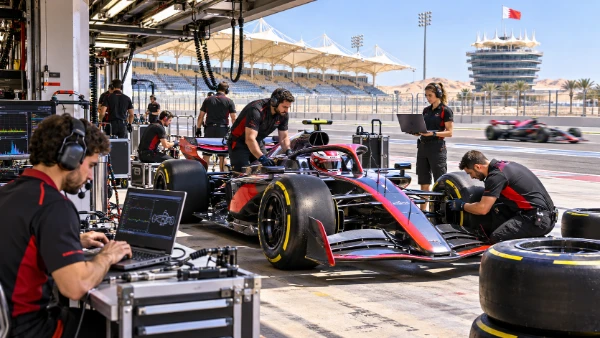
Testing typically begins with basic checks rather than immediate attempts to achieve the fastest possible lap. Engineers monitor cooling, brakes, electrical systems and other essential components while ensuring that the car operates as expected. Once confidence improves, teams can investigate suspension settings, tyre behaviour, aerodynamic adjustments and different approaches to energy deployment. Longer runs help establish whether performance remains consistent as tyres wear and fuel loads change. The fourth day gives teams additional flexibility to complete this work, particularly if mechanical problems, repairs or unfavourable conditions interrupt their original plans. However, there is no guarantee that every competitor will complete the same number of laps or obtain equally useful results.
How Drivers and Engineers Can Use the Additional Day
For drivers, the extra day offers another opportunity to become comfortable with a car that may behave differently from its predecessor. Even experienced competitors need time to understand braking characteristics, steering response, energy management and the effects of aerodynamic adjustments. A driver who feels confident in the car can provide clearer feedback, allowing engineers to identify whether a problem originates from the set-up, tyre performance or a broader design characteristic. The additional running may be especially valuable for rookies and drivers joining new teams, who must also become familiar with unfamiliar procedures and working relationships. Nevertheless, the limited number of cars means that teams must carefully balance each driver’s track time against technical priorities.
Engineers benefit from being able to repeat experiments rather than drawing conclusions from a single run. Suppose a team experiences unusual rear tyre wear during an afternoon session. It may need to examine the car, adjust its settings and conduct another representative run before deciding whether the problem has been understood. With only three days available, that process could consume a substantial part of the remaining programme. A fourth day creates room for further checks and reduces the pressure to make immediate decisions based on incomplete information. It also allows teams to compare performance across different temperatures, an important consideration at Bahrain, where conditions can change noticeably between daylight and evening sessions.
For spectators, however, the extra testing day should not be mistaken for another competitive event. Teams run different fuel loads, tyre compounds and development programmes, making direct comparisons between lap times unreliable. A car that leads the timing screens may be completing a relatively light-fuel run, while another competitor could be concentrating on reliability or race-distance performance. The most meaningful indicators often include the number of laps completed, the frequency of technical interruptions and the consistency of longer runs. Even these figures require context. Testing can reveal possible strengths and weaknesses, but the competitive order usually becomes clearer only when teams participate in qualifying and the opening Grand Prix under comparable conditions.
How the Extended Test Could Influence the 2027 Championship
The decision to provide additional preparation time comes ahead of a demanding 2027 Formula 1 calendar featuring 24 Grands Prix across 22 countries. The championship is scheduled to begin with the Bahrain Grand Prix on 12–14 March, followed by Saudi Arabia one week later. This creates a relatively short period between the conclusion of testing and the opening race, making efficient preparation essential. Teams must analyse the information collected in February, decide which adjustments are necessary and ensure that their cars are ready for competition. Because testing and the opening round take place at the same circuit, teams can also use their findings to establish an initial direction for car set-up.
Another significant feature of the 2027 season is the expansion of the Sprint calendar from six events to ten. Bahrain is scheduled to host a Sprint during the opening weekend, creating an immediate challenge for teams still learning about their cars. Sprint weekends provide less conventional practice time than standard Grand Prix meetings, leaving fewer opportunities to experiment once competitive running begins. The additional pre-season day may therefore prove particularly useful for establishing dependable starting settings before the championship gets under way. Teams that arrive with a clearer understanding of tyre behaviour, reliability and energy deployment could spend less time solving basic problems during the opening race weekend.
The effects will not necessarily be identical across the grid. Established teams with experienced personnel and strong development processes may use the extra running to refine details, while competitors experiencing reliability problems could devote most of their available time to repairs and essential checks. Smaller teams may also face difficult decisions about which upgrades to evaluate first. Although every entrant receives access to the same four-day test, equal opportunity does not guarantee equal progress. Resources, preparation and the quality of information gathered remain important. The FIA’s decision creates more time for everyone, but it does not remove the engineering and organisational differences that can influence performance throughout a championship.
Will Four Days of Testing Make Formula 1 More Competitive?
Longer testing can improve preparation, but it does not automatically produce closer racing. The competitive order depends on the effectiveness of each car’s design, power unit, aerodynamics and development programme. An extra day may help a struggling team identify problems before the opening race, yet it could equally allow a leading competitor to improve an already strong package. The main benefit is the opportunity to reduce avoidable uncertainty. When teams understand their equipment more thoroughly, they are better positioned to make reliable technical decisions rather than spending the opening races investigating issues that might have been detected during winter preparation.
Reliability is another area where the extended session could make a meaningful difference. A mechanical failure during testing is inconvenient, but a similar problem during a Grand Prix can cost championship points. Additional running increases the opportunity to identify weaknesses in cooling, electrical systems, mechanical components and other areas before the first race. It also gives teams more time to confirm whether repairs or modifications have solved a problem. However, pre-season testing cannot reproduce every situation encountered across a 24-race calendar. Different circuits, weather conditions and race demands will continue to expose issues that were not apparent in Bahrain.
Ultimately, the four-day test represents a measured adjustment to Formula 1’s preparation schedule rather than a fundamental change to the championship. The FIA has recognised that the cars introduced under the 2026 regulations require careful management and continued development, even after their first season of competition. By extending the 2027 test to four days, the governing body is giving teams a better opportunity to evaluate their cars, prepare their drivers and address potential reliability concerns. The real value of that decision will become apparent when the cars return to Bahrain for the opening Grand Prix in March, where preparation must finally translate into competitive performance.