Formula E 2026/27: E-Prix vs E-PrixUnleashed and the New Points Battle
Formula E is preparing for one of the biggest changes in its history as the 2026/27 season introduces the GEN4 racing car and two distinct race formats. Alongside the traditional E-Prix, fans will see E-PrixUnleashed, a shorter contest designed to highlight the performance of the new electric machines. Both formats will award full championship points, but their different durations, aerodynamic settings and energy requirements will force teams to rethink their strategies. Qualifying will also become more important, with additional points available to drivers who reach the Duels. Together, these changes could reshape the championship battle, rewarding drivers who can combine outright speed with consistency and intelligent race management.
E-Prix and E-PrixUnleashed: Two Different Approaches to Racing
The 2026/27 Formula E season will introduce a different structure for double-header race weekends. Instead of hosting two races under essentially identical conditions, these events will feature an E-PrixUnleashed and a traditional E-Prix. The shorter race is designed to emphasise the speed and cornering abilities of the GEN4 car, while the longer contest maintains Formula E’s established focus on energy efficiency and strategic decision-making. Each race will have its own qualifying session, starting grid and championship points. Importantly, both formats will carry equal sporting value, meaning that a victory in either race will contribute the same number of points towards the championship standings.
E-PrixUnleashed will last 30 minutes and use a high-downforce aerodynamic configuration. This setting increases grip, allowing drivers to approach corners more aggressively and maintain higher speeds through demanding sections of a circuit. The shorter distance also reduces the time available to recover from mistakes, making qualifying performance, starting position and early overtaking opportunities particularly important. Drivers will receive six minutes of ATTACK MODE, providing additional power for attacking opponents or defending their positions. Unlike the traditional race, E-PrixUnleashed will not feature PIT BOOST. Removing the mandatory charging stop should create a more continuous contest in which drivers can concentrate on their immediate rivals.
The traditional E-Prix will remain a 45-minute race and will use a low-downforce aerodynamic configuration. Reducing aerodynamic resistance helps the cars operate more efficiently, making energy conservation an important consideration throughout the event. Drivers will have eight minutes of ATTACK MODE and must complete a mandatory PIT BOOST stop. This creates additional strategic decisions because teams must balance their drivers’ positions against the timing of their charging stops and remaining energy reserves. A driver leading during the opening stages will not necessarily be in the strongest position towards the finish, especially if a rival manages energy more effectively or benefits from a better-timed stop.
How the GEN4 Car Will Transform Both Race Formats
The introduction of GEN4 represents a substantial performance improvement for Formula E. The new car produces up to 450kW during normal racing and 600kW when ATTACK MODE is activated, equivalent to approximately 804bhp at maximum output. It also features active all-wheel drive throughout the race, improving acceleration and helping drivers make better use of the available power. Formula E expects the car to reach speeds of approximately 335km/h, while its usable race energy capacity increases to 55kWh. These improvements should create faster racing and give drivers more opportunities to challenge their opponents, particularly on circuits with a mixture of long straights and technical corners.
The GEN4 car’s two aerodynamic configurations are particularly important to the new race formats. High downforce provides additional grip, making it suitable for the aggressive driving style expected during E-PrixUnleashed. Drivers should be able to brake later, maintain greater cornering speeds and attack tighter racing lines. Low downforce, meanwhile, reduces resistance as the car moves through the air, helping teams manage energy over the longer E-Prix distance. These characteristics mean that a setup which performs exceptionally well in the sprint may not provide the same advantages during the traditional race. Teams will therefore need to prepare carefully for both conditions rather than relying on a single approach throughout the weekend.
GEN4 also introduces improvements in energy recovery, allowing the car to regenerate more than 40% of the energy used during a race through braking. This remains particularly relevant in the traditional E-Prix, where managing energy consumption can determine whether a driver has enough power to attack during the closing stages. Another development is the introduction of dedicated wet-weather tyres alongside the all-weather option, giving teams more suitable equipment when conditions deteriorate. Combined with the car’s increased power and revised aerodynamic characteristics, these changes should make adaptability a defining quality of successful drivers. Those who quickly understand the behaviour of GEN4 in different conditions could gain an early championship advantage.
How ATTACK MODE and PIT BOOST Will Influence Race Strategies
ATTACK MODE will remain an essential feature of Formula E racing in 2026/27, although its duration will depend on the race format. Drivers activate it by leaving the normal racing line and passing through a designated activation zone. This manoeuvre can temporarily cost valuable track position, but it unlocks the GEN4 car’s maximum output of 600kW. The additional power can help drivers complete overtakes, defend against faster opponents or recover positions lost earlier in the race. In E-PrixUnleashed, the six-minute allocation will encourage drivers to make effective use of a relatively short performance advantage. The traditional E-Prix will provide eight minutes, allowing ATTACK MODE to play a role in longer-term race strategy.
PIT BOOST creates an important distinction between the two formats. During the traditional 45-minute E-Prix, drivers must complete a mandatory stop that provides an additional 3.85kWh of energy through approximately 30 seconds of rapid charging at 600kW. This represents a 10% energy increase under the published PIT BOOST system. However, drivers lose time entering the pit lane, stopping and returning to the circuit. Teams must therefore determine when the benefits of receiving additional energy outweigh the immediate loss of track position. The timing can become especially important when several competitors are closely matched, as a well-executed charging stop may allow a driver to rejoin ahead of rivals who stopped earlier.
The situation is different in E-PrixUnleashed, where there is no mandatory PIT BOOST stop. Drivers can focus on maintaining their position and using ATTACK MODE at the most effective moment without accounting for a charging interruption. The shorter race also leaves fewer opportunities to recover from a poor qualifying result or an unsuccessful overtake. In the traditional E-Prix, teams have more time to adjust their approach as energy consumption, traffic and charging stops influence the order. Each team has only one PIT BOOST charging rig, preventing its two drivers from completing the service simultaneously. This limitation introduces another strategic consideration, particularly when both cars are running close together and need to stop within a similar period.
What the New Format Means for Double-Header Weekends
Double-header weekends will become a more demanding test of preparation and adaptability. Each race will feature its own qualifying session, allowing drivers to recover from a disappointing result on the previous day. However, teams must also prepare for substantially different racing conditions. A driver who excels during a high-downforce sprint may struggle to reproduce that performance in the longer efficiency-focused E-Prix. Engineers will need to make adjustments to the car’s setup, while strategists must determine how to approach ATTACK MODE, energy consumption and PIT BOOST. Consistency across both formats could become particularly valuable because a successful weekend offers two opportunities to secure a substantial championship points total.
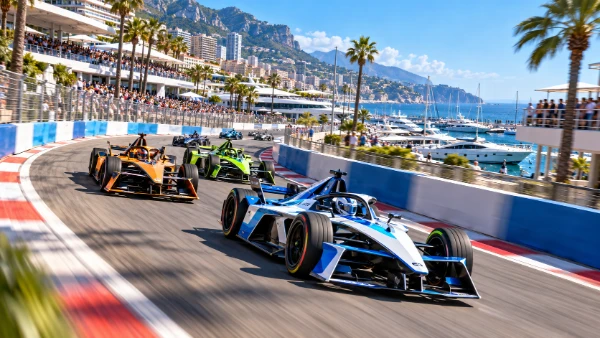
The new season is scheduled to begin with a double-header in Jeddah, Saudi Arabia, on 18 and 19 December 2026. The Jeddah Corniche Circuit will provide the first competitive opportunity to compare the two formats using the GEN4 cars. The calendar also features double-header weekends in Monaco, Berlin, London, Zandvoort, Madrid, Shanghai and Tokyo. Monaco is scheduled for 1 and 2 May 2027, following a calendar adjustment announced in August 2026. London will move to Brands Hatch, a historic British racing circuit known for its elevation changes and challenging corners. The introduction of these venues should give teams a variety of conditions in which to evaluate the strengths of their cars and drivers.
The announced 2026/27 calendar includes 21 races across 13 events in 11 countries, making it the largest Formula E season scheduled to date. Eight events are planned as double-headers, while five will feature a single race. Under the announced structure, that means eight E-PrixUnleashed contests and 13 traditional E-Prix races throughout the championship. The season is scheduled to conclude with two races in Tokyo on 24 and 25 July 2027. Although the traditional race remains the more frequent format, the eight shorter contests will offer full championship points and could significantly influence the standings. A driver who consistently performs well in E-PrixUnleashed may compensate for weaker results in longer races, while competitors who struggle with the sprint format could lose valuable ground.
Formula E 2026/27 Points System: What Changes for the Championship?
The introduction of E-PrixUnleashed will not change the existing race points distribution. Both formats will continue to use the standard Formula E scoring system, awarding 25 points to the winner, 18 to second place and 15 to third. Drivers finishing fourth through tenth will receive 12, 10, 8, 6, 4, 2 and 1 point respectively. This means that winning a 30-minute E-PrixUnleashed will be worth exactly the same as winning a 45-minute E-Prix. The decision gives both formats equal championship significance and ensures that the shorter races cannot be treated as secondary events. Every finishing position matters, particularly during double-header weekends where competitors have two opportunities to increase their points totals.
The more significant adjustment concerns qualifying. Formula E will retain its existing structure, in which drivers compete in two qualifying groups before the fastest four from each group progress to head-to-head Duels. However, from 2026/27, drivers who reach the knockout stages will receive championship points based on their progress. The four drivers eliminated in the quarter-finals will earn one point each, while the two drivers losing in the semi-finals will receive two points apiece. The runner-up in the final will collect three points. The driver who wins the final will earn four points for their qualifying result, plus an additional point for securing pole position, creating a maximum qualifying reward of five points.
These changes make qualifying more important to the championship than in previous seasons. A driver who repeatedly reaches the Duels can accumulate additional points even without regularly winning races. Equally, a competitor who struggles to qualify near the front may lose ground before the race begins, increasing the pressure to recover positions. The additional points also create a stronger connection between single-lap speed and championship success. Teams must now consider qualifying performance as a direct source of points rather than simply a way to secure a favourable starting position. Over a calendar featuring 21 rounds, relatively small qualifying advantages could add up to a meaningful difference in the Drivers’ and Teams’ World Championship standings.
Why Qualifying Points Could Decide the 2026/27 Title Battle
A straightforward example shows how the revised scoring structure could affect championship positions. Suppose Driver A wins an E-Prix but fails to reach the qualifying Duels, collecting 25 points from the race. Driver B wins qualifying and starts from pole position but finishes second in the race. Driver B would earn 18 points for second place and five additional points from qualifying, producing a total of 23. Despite winning the race, Driver A would gain only two points on Driver B rather than the seven-point difference between first and second under the race scoring system alone. This creates an additional incentive to perform consistently during qualifying, particularly when competing against a closely matched championship rival.
The new system could also influence team tactics and the wider championship battle. If both drivers from the same team regularly progress into the Duels, they can secure valuable points before either race begins. Teams with strong qualifying performance may therefore accumulate an advantage over competitors who depend primarily on recovering positions during races. However, qualifying speed alone will not guarantee championship success. Reliability, efficient energy management, effective ATTACK MODE use and avoiding unnecessary collisions will remain essential. Drivers who can combine consistent qualifying results with strong performances in both E-Prix and E-PrixUnleashed will have the greatest opportunity to build a sustainable points advantage throughout the season.
The potential rewards during double-header weekends illustrate the importance of the revised system. A driver who wins both races and secures pole position in both qualifying sessions could collect 60 championship points across the weekend, combining 50 points from race victories with ten from qualifying. Such a result could substantially change the standings, especially towards the end of the season when championship rivals may be separated by only a few points. With faster GEN4 cars, two contrasting race formats and an expanded qualifying points system, Formula E 2026/27 will reward a broader range of abilities than before. The championship will still be decided by race results, but qualifying consistency and the ability to adapt between sprint and efficiency-focused racing could ultimately determine who becomes world champion.